Why Dota 2 Organizations Are Leaving the Scene
Let’s stop lying to ourselves for five minutes.
Dota 2 organizations are not leaving because the game is dead. They are not leaving because the level is low. They are not leaving because fans suddenly stopped caring. They are leaving because the business side of this e-sport is absolutely cooked.
That’s it. That’s the truth.
Every time another organization walks out of the scene, people try to act surprised. They start with the same garbage lines every single time. “Maybe they had internal issues.” “Maybe the roster underperformed.” “Maybe they are restructuring.”
No, guys. It is money. It has been money for a while, and now it is becoming impossible to ignore.
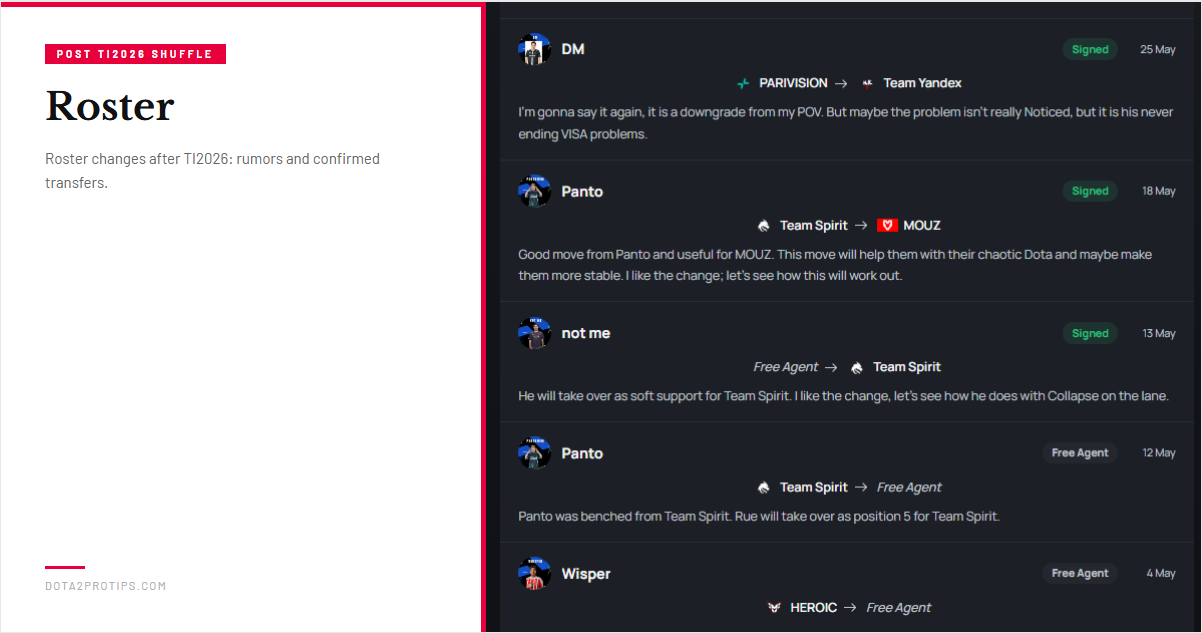
Just look at HEROIC.
This is the hardest news I've had to give in my career.
— Robin Nymann (@robinnymann) May 4, 2026
The unfortunate reality is that Dota is a tough game to commercialise, and at HEROIC we have not been able to make it bear fruit for a long time now. I have nothing but faith in this group of people, and the only reason… https://t.co/A7w7TrCy1i
This was not some random organization that entered Dota, got slapped around for six months, and disappeared. This was a team that actually built something.
They made history for South America.
They had results.
They had fans.
They had personality.
They had a story.
And even after all that, the organization still pulled the plug because the division was NOT financially sustainable. Think about how insane that is for a second. A roster can make deep runs, build a real brand, and qualify for major events and still be told, "Sorry boys, this does not make business sense anymore.”
And if you think HEROIC is just an isolated case, then wake up.
Evil Geniuses and Talon Esports stepped away too. EVIL GENIUSES. One of the most iconic names in the history of Dota 2. We are not talking about some nobody org here. We are talking about a brand that was practically built inside this game. And even they basically looked at the scene and said, “Yeah… unless something compelling happens, we are not forcing it.” That should have been the moment where everybody stopped coping. Because when even legendary brands are no longer treating Dota as a must-have division, that means the problem is not one team. The problem is the ecosystem. I am not saying that EG left Dota JUST because of money, but a big part of it was a MONEY PROBLEM.
And the ecosystem, if we are being brutally honest, is broken in exactly the worst way possible.
Because from the outside, Dota still looks rich.
You see million-dollar events. You see stacked tournaments. You see insane gameplay. You see the best players in the world doing things that make every other e-sport look simple. So the average person says, “How can this scene be in trouble? There is so much money.”
But that is exactly the trap.
Dota has tournament money, not business stability.
Those are not the same thing.
Prize pools are not guaranteed income for organizations.
Prize money is volatile.
Prize money depends on placements.
Prize money gets split.
Prize money does not magically pay for everything that actually drains an org dry: salaries, managers, coaches, analysts, flights, hotels, visas, bootcamps, content production, taxes, legal nonsense, staff, and all the ugly boring costs nobody likes talking about because they are not visible.
A flashy Liquipedia prize figure means absolutely nothing if the operation behind it bleeds cash every month.
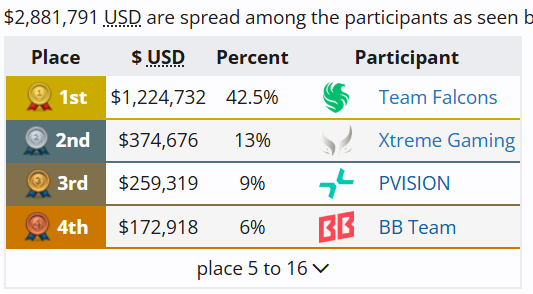 And that is where people still live in the old TI fantasy.
For years, Dota 2 had this insane aura around it because of The International. It was the game with the stupid prize pools. The ridiculous ones. The numbers that made headlines even outside esports. That one giant event created the illusion that Dota was economically untouchable.
Not anymore.
That old world is gone.
Valve made its choice years ago when it moved away from the Battle Pass-driven model. I understand why they did it from a game perspective. They wanted to focus more on updates for all players instead of centering the whole year around one giant monetization event. Fine. I get it. As a player, maybe even as a fan, you can respect that.
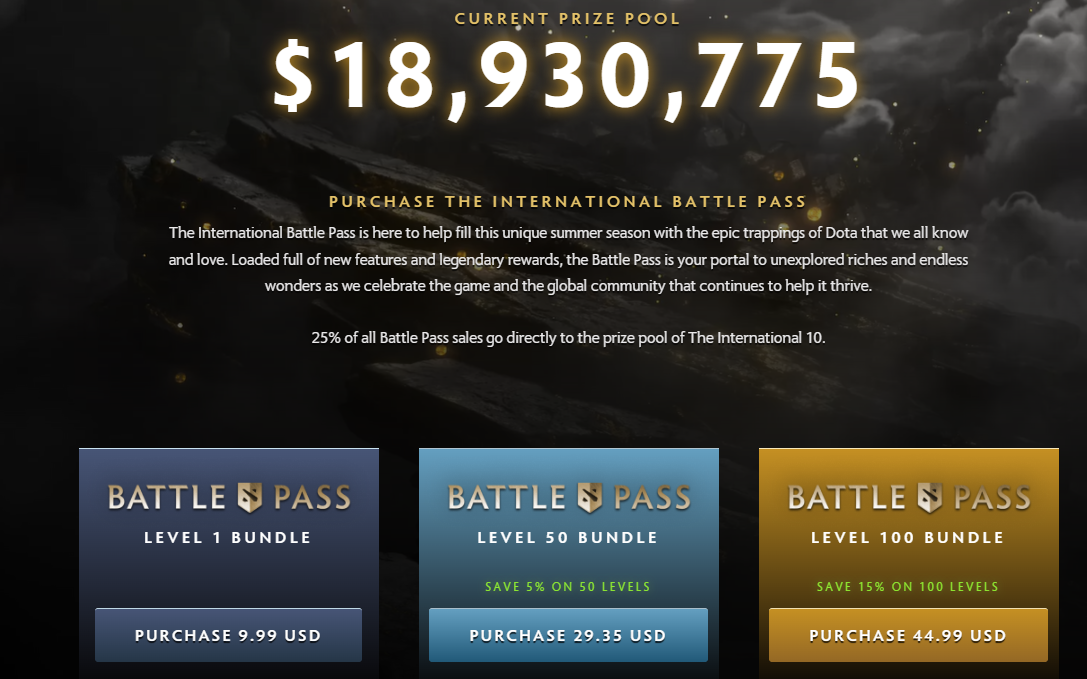 But on the esports side? That decision ripped out the biggest money-printing machine this game ever had.
And Dota never really replaced it.
That is the killer.
The TI myth used to cover up a lot of structural weakness because everyone could tell themselves, “Yeah, but if you hit the big one, everything changes.” That logic does not hit the same anymore. The old mega-prize-pool aura is gone. The scene still has huge tournaments, yes, but it does not have the same once-a-year financial explosion that made the whole e-sport feel bigger than life. And when you remove that from the equation, what remains is a scene that is amazing competitively but shaky as hell commercially.
And please do not misunderstand me here — the problem is not that there is no competition.
The problem is that Dota has become an e-sport where the level is world class but the business model is tier 2.
That is why orgs keep leaving.
The Dota Pro Circuit is gone. The old publisher-backed seasonal structure is gone. What replaced it is mostly an event-based ecosystem driven by tournament organizers, especially ESL, and THANK GOD for that because without them this scene would look even worse. ESL deserves credit. They are actually trying. They have million-dollar events. They have EPT points. They have club rewards. They have a functioning competitive calendar. That matters.
But let’s not pretend it solves everything.
An event circuit is not the same as a stable ecosystem.
It is still a scene where if you miss an event, bomb out early, or fail to monetize your brand properly, the pressure hits immediately. And if you are not one of the absolute top teams farming placements every month, you start asking the ugly question real fast. And that's another problem with Dota, because there is no room for Tier 2/Division 2 teams to breathe. That's why you see a LOT of 322s in lower divisions, because they can't sustain themselves. Did you notice that EVERY SINGLE event has the same exact teams, our usual suspects?
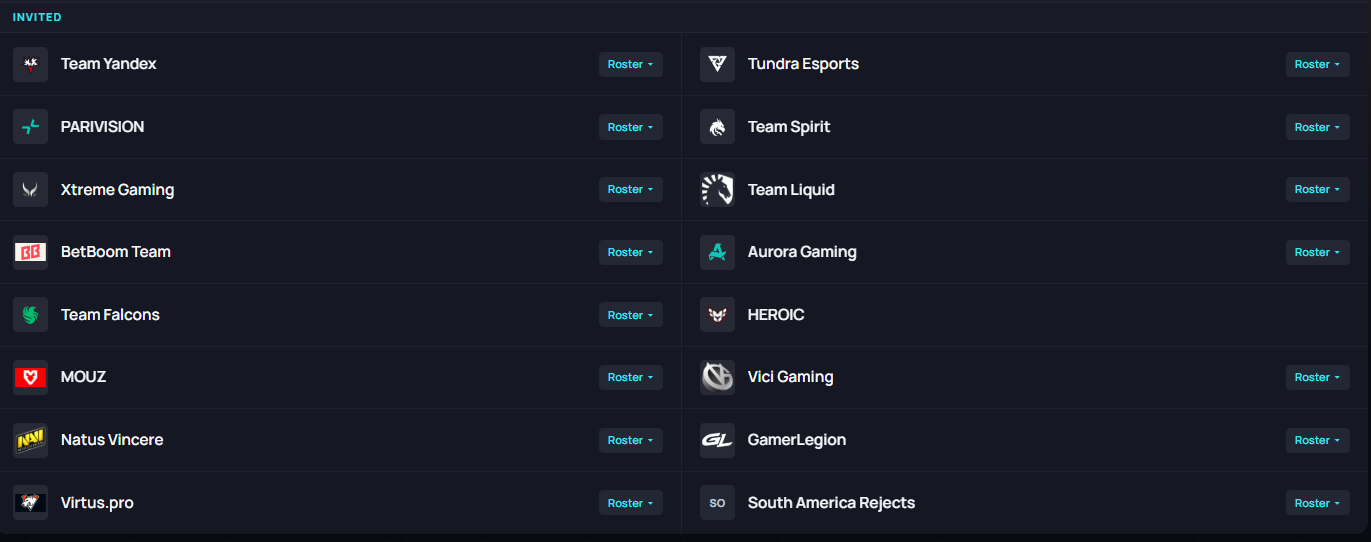
Why are we even paying for this?
Now let’s talk about the most uncomfortable part of this whole thing.
Because if the scene is still breathing right now, a big part of that is due to betting money.
Yes, I said it.
Like it or not, bookmakers are helping keep Dota 2 alive.
And before somebody gets offended and starts pretending this is some wild conspiracy take, no, boys, this is just reality. Sponsorship is one of the main revenue streams in esports.
Everyone knows that.
And betting brands have become one of the few categories that still consistently show up, spend money, and actually want access to esports audiences. They are not doing it because they love the sanctity of the game. They are doing it because the audience fits, the engagement fits, and the betting product fits. That is the ugly business truth.
And it is not hidden either.
You can literally see betting partners attached to parts of the ecosystem. Tournament circuits have them. Teams have them. It is right there in front of your face. PARIVISION openly has PARI as a key partner. ESL’s Dota ecosystem has an active betting brand presence. So when people act shocked and say, “Wow, is the scene really being kept afloat by bookmakers?”
My answer is, "What do you think you are looking at?"
Now, am I saying that betting sponsors are the future, and Dota should build everything around them?
No.
I am saying they are one of the reasons the present has not collapsed harder.
That is a very different statement.
Because if you remove betting money from Dota tomorrow, the scene does not become cleaner and healthier overnight. It becomes poorer. Much poorer. Some teams lose one of the few sponsor categories still willing to spend. Some events lose one of the few categories still interested in visibility. And in a scene where organizations are already leaving because the numbers don’t work, removing one more source of money without replacing it would be like taking oxygen away from somebody already struggling to breathe.
That is why this conversation needs to grow up. You need to grow up.
The solution is not to sit there and cry that betting exists. Betting already exists. In fact, Riot—which has historically been much more restrictive on a lot of things than Valve—eventually opened betting sponsorship opportunities for top teams in LoL and VALORANT because even they understood the obvious: teams needed more revenue options.
The difference is that Riot at least tried to build guardrails around it. They talked about approvals, official data, integrity systems, player protection, education, and keeping official broadcasts clean. Whether you love Riot or hate Riot, that is at least an adult approach to a messy problem.
And that brings us to the real question.
What is the solution for Dota 2?
Because just screaming “the scene is dying” does nothing. We all know the problem now. Organizations are leaving. Money is unstable. Prize pools are not enough. Betting sponsors are carrying a chunk of the commercial side.
Fine.
What now?
First of all, the scene needs more guaranteed org revenue, not just player prize money.
This is why ESL’s club reward system is one of the few genuinely smart things in the current ecosystem. It acknowledges the most basic truth in esports: if you want organizations to stay, you need to pay organizations too.
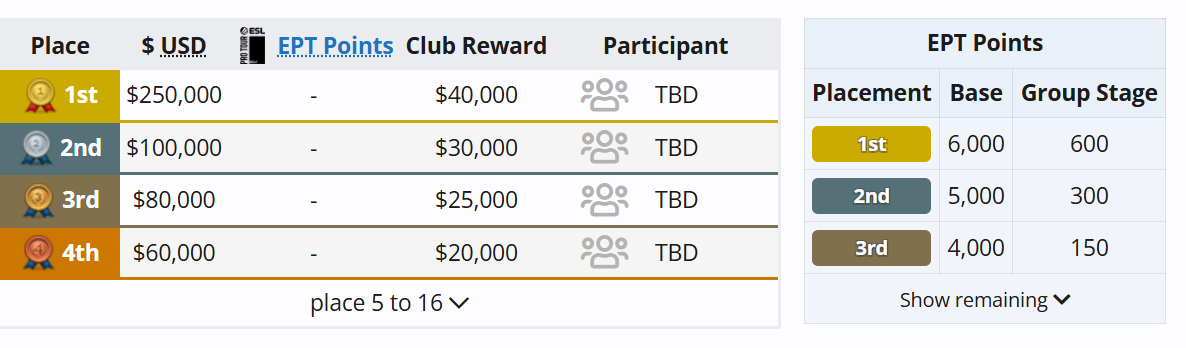
Not just the players.
Not just the winners.
The ecosystem.
If tournament organizers want stable participation and stronger brands around their events, they need to stop pretending that prize money alone solves the business problem.
It doesn’t.
Club rewards need to grow. More events need to adopt something similar. And the whole scene needs to stop relying on “just place higher lol” as if that were a serious financial model.
Second, Dota needs a real in-client esports monetization model again.
I am not even saying “bring back the exact same Battle Pass.” Maybe that era is gone. Maybe Valve never wants to do it the old way again. Fine. But then build something else.
Event supporter packs.
Tournament-themed cosmetics.
Revenue-share packs.
Anything.
Just something that allows fans to directly fund the esports side of the game again in a way that helps teams and organizations, not just the vague idea of the scene. Because right now Dota has one of the most passionate fanbases in esports, and yet the connection between fandom and sustainable team funding is still way weaker than it should be.
That is madness.
If people are willing to spend on the game — and they are — then give them a way to support the teams, events, and ecosystem directly. Not through vibes. Through structure.
Third, if the scene is going to keep taking betting money, then at least do it properly. Line NAVI did on their website:

No shady nonsense. No weird gray-market garbage. No skin-gambling trash pretending to be esports support. No “we’ll figure out integrity later” clown show.
If betting sponsors are going to remain part of the scene — and they will — then Dota needs actual standards around them.
Vet partners.
Use official data.
Educate players.
Monitor suspicious activity.
Protect minors.
Keep broadcasts from turning into a slot machine fever dream. That is the bare minimum. If the scene wants to take controversial money, then it has to act like a real industry instead of a pub stack that just found a sponsor.
Fourth, fix the cost problem.
This is the part casual fans always forget, because it is boring and not sexy. But do you know what kills orgs faster than anything?
Constant expense.
Constant travel.
Constant instability.
Constant regional inefficiency.
HEROIC’s story showed that perfectly. Being a top team from South America in a heavily Europe-centered ecosystem is not just hard competitively — it is brutal operationally. Business-wise, it doesn't make any sense.
Flights.
Scheduling.
Time zones.
Qualifiers.
Exhaustion.
Repeating that cycle month after month is expensive and draining even if the roster is good.
So yes, if Dota wants to keep organizations from leaving, it has to make participation less stupidly expensive. Better scheduling. Better support. Better regional balance. Fewer calendar disasters. Less pointless suffering just to stay in the race.
One more uncomfortable solution:
Stop paying players like it’s 2021 and start funding organizations properly.
This is the part nobody wants to say out loud, so I will.
Dota 2 still carries salary expectations from a completely different era.
An era where:
The international prize pools were absurd.
Battle Pass money was overflowing
Orgs believed one TI run could fix everything.
And players were paid like the money faucet would never close.
That era is gone.
But the contracts?
The expectations?
The “I’m a Tier 1 player, pay me like one” mentality?
Those never really adjusted.
And I’m sorry, but the math simply does not work anymore.
The current problem with the Dota 2 financial model
Right now, a lot of Dota organizations are stuck in the worst possible position:
They pay HUGE monthly salaries. (BTW: For a tier 1 player (aka Nisha, 33, etc.), it is ~ 20K-30K US dollars, which is insane.
They absorb all operational risk.
They cover travel, staff, infrastructure, content, legal, taxes, visas, bootcamps
And then they still watch most prize money flow directly to players.
That model might make players happy in the short term—but it is killing the organizations that make professional Dota possible in the first place.
This is not anti-player.
Let me be very clear here, because I don’t want this twisted:
This is not about “players don’t deserve money.”
This is about sustainability.
Because when orgs die, players don’t magically become safer. They become free agents with nowhere to go. They become “tagless stacks.” They lose stability. They lose support. They lose long-term careers. (aka: South America Rejects)
 A scene where players squeeze every last dollar today while the infrastructure collapses underneath them is not a healthy scene. It’s a short-term cash grab with a delayed explosion.
And we are already seeing the explosion.
Organizations take most of the risk.
Here is the brutal reality:
In modern Dota, organizations take almost all the risk, but not nearly enough of the upside.
That is backwards.
What a healthier system could look like
A healthier system looks like this:
More reasonable, sustainable base salaries
Clear performance bonuses
Prize money split in a way where organizations actually recover part of their investment
Long-term contracts that reward consistency, not just one hot tournament
And flatter salary distribution instead of a few stars eating the entire budget
Right now, the scene is still structured like it’s 2019, but funded like it’s 2026.
That disconnect is deadly.
What organization owners are actually asking now
If you are an org owner today, you are not asking the following:
“Are our players good?”
You are asking:
“If we finish 7–8th three times in a row, do we survive?”
And too often, the answer is NO.
That is why organizations leave even when teams are competitive.
That is why HEROIC walked away despite results.
That is why legendary brands are stepping back or staying “passive.”
Not because players are bad.
Because contracts and expectations don’t match reality anymore.
The Dota 2 scene needs to rebalance the money flow.
So yes—uncomfortable solution number six:
Organizations must:
Take a real, meaningful cut of the prize money
Be allowed to profit when a roster succeeds
Have financial upside that justifies long-term investment
And players must understand something fundamental:
A slightly smaller slice of a sustainable ecosystem beats a big slice of a dying one.
Because the alternative is not “players win.”
The alternative is no orgs left to pay them at all.
“But Greg, players will just form stacks."
And before someone says, "Players will just form independent stacks”—good luck with that long-term.
Stacks don’t pay:
psychologists
analysts
travel coordinators
lawyers
visas
media
facilities
or consistency
Stacks survive tournaments.
Organizations build careers.
Final thoughts
If we want Dota 2 to exist beyond the next two seasons, then the scene has to grow up. That means accepting that the old salary bubble popped, whether people like it or not. Pretending it didn’t only accelerates the collapse.
So no, this is not anti-player.
This is pro-Dota.
Because a scene where organizations can’t make money is not a competitive ecosystem—it's a charity project with a ticking clock.
And that clock is already loud enough that everyone can hear it.
And finally — maybe the hardest truth for orgs themselves — teams need to become more than just match results.
You cannot survive in modern esports if your entire brand is a Liquipedia page and a few logos on jerseys and t-shirts.
Sponsors want reach.
They want content.
They want stories.
They want players with personalities.
They want fan engagement they can actually measure. They want something more than “we got top 8 at a LAN, please give us money.” That era is dead.
So yes, the ecosystem is broken. But orgs also need to adapt. A Dota team that cannot build content, identity, and media value is making itself even easier to cut the second the spreadsheet turns red.
At the end of the day, this is what it all comes down to:
Dota 2 is still one of the greatest esports in the world to watch.
It still has the smartest drafts. The craziest comebacks. The highest-level macro. The most beautiful late-game chaos in all of esports.
But none of that automatically means it is a good business.
And that is the tragedy.
Because what is killing organizations is not lack of passion. It is not lack of talent. It is not lack of unforgettable moments.
It is the fact that in 2026, loving Dota 2 and making money from Dota 2 are two completely different things.