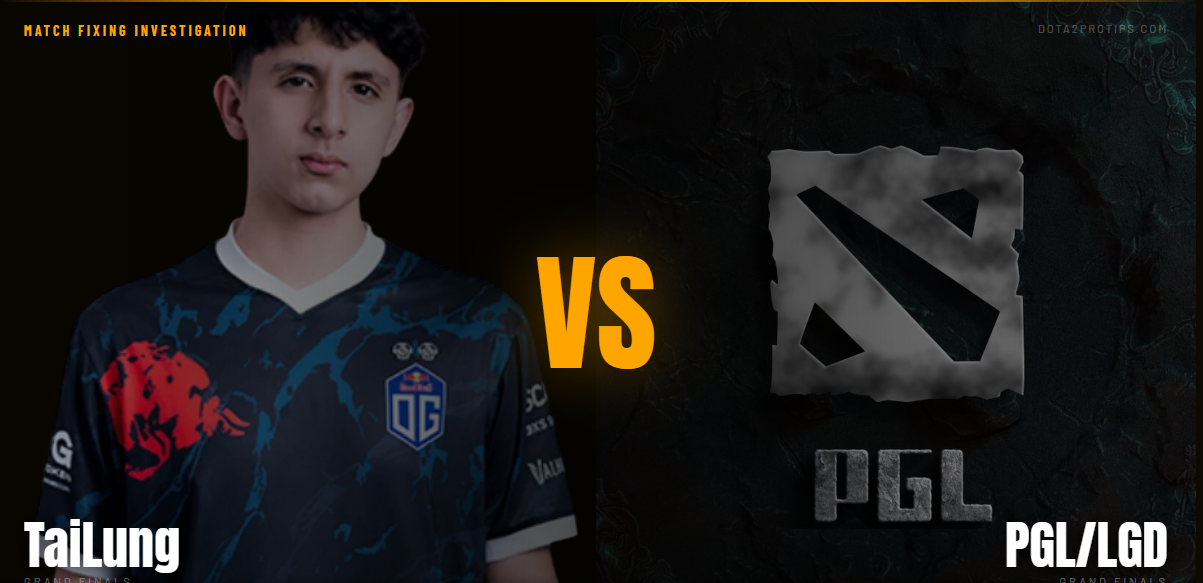
TaiLung Match Fixing Investigation
Santiago “TaiLung” Agüero Gustavo has finally spoken publicly after being removed from LGD Gaming’s TI 2026 lineup and banned from The International 2026, with PGL also barring him from all future PGL events. LGD’s official statement says the organization received information related to “322”—competition integrity—involving TaiLung, launched an internal review, reported the matter to tournament-related parties, cooperated with further checks, and then said the tournament side decided TaiLung would not be allowed to play TI 2026 while PGL imposed a lifetime ban from its events.
That is the official part.
But here is where the story gets strange: neither LGD Gaming nor PGL has publicly disclosed the specific conduct TaiLung is accused of, the exact matches involved (there is that BetBoom match, which I don't really believe), or the evidence behind the punishment.
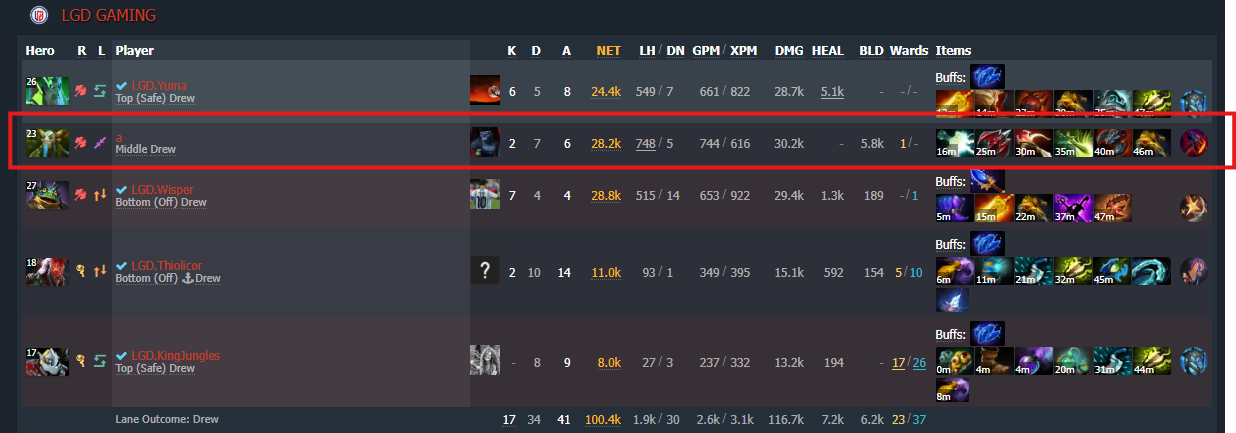 And when the allegation is this serious—betting, match-fixing, or anything close to it—that silence creates the worst possible vacuum: Reddit threads already made him worse than Escobar.
TaiLung’s new statement is his attempt to fight that vacuum.
He denies ever accepting a betting proposal or agreeing to manipulate a Dota 2 match, apologizes for his emotional reaction during the investigation, and asks one simple question to LGD and PGL: what exactly is the reason for my suspension? His statement is clear that TaiLung called on both parties to disclose the evidence behind the suspension and said he is willing to undergo a full investigation, including checks of his accounts and financial records.
And honestly, that is the part I cannot ignore. Competitive integrity matters. Nobody wants fixed games in Dota. Nobody wants “322” rotting the scene from the inside. But if a 17-year-old player is permanently banned from PGL events and removed from his first TI, the public process needs to be stronger than “trust us, something happened.” Source: "Trust me, bro."
Timeline: what happened, what is confirmed, and what is claimed
| Date | Event | Status |
|---|---|---|
| May 26, 2026 | LGD Gaming returned to Dota 2 by signing the former HEROIC roster, including Yuma, TaiLung, Wisper, Thiolicor, and KJ. | Confirmed |
| June 2026 | LGD earned the South American TI 2026 slot after a qualifier run that included a 3-0 grand final win over PlayTime. | Confirmed by coverage |
| August 6, 2026 | TaiLung says LGD initially told the team that its review had found no suspicious activity or abnormalities in their matches. | TaiLung's claim |
| August 7, 2026 | TaiLung says LGD asked to inspect his phone; he agreed, an old Discord conversation was found, and an unknown-number message triggered the incident where he threw his phone. | TaiLung's claim |
| August 9, 2026 | LGD publicly announced that TaiLung would be banned from TI 2026 and that PGL had issued a lifetime ban from PGL events. | Confirmed |
| August 9–10, 2026 | LGD moved to replace TaiLung, with Topias "Topson" Taavitsainen confirmed as the stand-in / new mid laner for TI 2026. | Confirmed |
| August 11/12, 2026 | TaiLung published a long public statement denying match-fixing and asking LGD/PGL to show the evidence behind the decision. | Confirmed by coverage |
What LGD and PGL have officially said
LGD’s official Weibo statement is careful and very "corporate." It does not say “match-fixing.” It does not say “betting.” It says LGD received information related to competitive integrity involving TaiLung, immediately began internal verification, reported the information it had to tournament-related parties, and continued cooperating with later checks and communication.
The key line is the outcome: according to LGD, THE TOURNAMENT SIDE decided TaiLung would be banned from The International 2026, and PGL decided to permanently ban TaiLung from all PGL-run events.
LGD Dota2 division announcement pic.twitter.com/lwa4FS4UIU
— LGD Gaming (@LGDgaming) August 9, 2026
That is a strong institutional stance, and to be fair, tournament organizers cannot simply ignore integrity warnings right before TI. If there is credible evidence that any player might have compromised matches, organizers have to protect the event first. On this we can agree.
But here is the problem.
Public trust also matters. And as of the opened public sources, the confirmed reason remains only “competitive integrity issue,” with no specific behavior, match, bet, transaction, or rule breach publicly explained. That is not enough for the community to understand the decision. It may be enough internally, but externally it leaves everyone arguing in the dark. And to make matters worse, people are really MEAN; they will always destroy the image of someone without ANY fact-checking.
What TaiLung says happened
TaiLung’s statement paints a very different picture of the days before the ban. According to him, the team was told about a betting-related concern involving an account that allegedly placed large bets — reportedly between $20,000 and $40,000 per match — on LGD games. He says suspicion later turned toward him and that teammates Yuma and KJ confronted him directly about whether he was involved.
He denies it completely.
His position is simple: he says he never accepted any proposal, never reached any agreement connected to betting or match-fixing, and never played a game with anything other than the goal of winning.
The most damaging part of the story, from an outside perspective, is the phone incident.
TaiLung admits that while LGD was examining his phone, investigators found an old Discord conversation with a friend from a previous tournament period; he says the conversation involved joking about money and that he made a mistake by playing along, but no agreement came from it. He also says an unknown number messaged him claiming to be his mother and mentioning money, but that the number was not actually his mother’s saved contact.
Then he panicked. He threw the phone (big mistake; if you are innocent, WHY the hell would you throw the only piece that can provide you some alibi?). That looks terrible. TaiLung admits it was a mistake and apologized to his teammates, maintaining that a bad emotional reaction under pressure is not the same thing as proof of match-fixing. (I kind of call BS on that).
The broader integrity context
The Dota 2 scene was already sensitive to integrity issues BEFORE TaiLung’s case. In July, ESIC provisionally suspended Oswaldo “DarkMago” Herrera and Juan “Vintage” Angulo from PTime/PlayTime during the Dota 2 Esports World Cup 2026 as part of an ongoing integrity investigation. ESIC said those measures were protective and precautionary, meant to safeguard the competition, preserve evidence, and support the fair conduct of the investigation.
That last point is important.
ESIC explicitly emphasized that no final determination of guilt had been made in that case. That is how these situations should be worded: protect the tournament if needed, but be crystal clear that interim action is not the same as a final verdict.
In TaiLung’s case, the punishment appears much heavier from the outside: not just removal from a current event, but a permanent PGL ban from all future PGL events. If the evidence is strong enough to justify that, then the organizers should be able to explain the category of violation, the process, and whether there is an appeal route—without necessarily dumping private data or investigative material into the public.
Because right now, the public-facing record is lopsided. The punishment is visible. The evidence is not.
Still unknown
The public still does not know the exact conduct TaiLung is accused of, the specific matches or tournament moments under review, whether betting records directly connect to him, whether PGL has an appeal mechanism for this sanction, or whether Valve will issue its own statement.
That is the core of the issue.
Not whether people on Twitter OR Reddit think a replay looks suspicious. Not whether one bad fight in a BetBoom game looked weird. Not whether a Discord joke looks awful out of context. The core issue is whether the punishment is backed by verifiable evidence and whether the player gets a fair chance to answer it.
Dota needs integrity enforcement but also a visible process.
Let’s be very clear: if TaiLung fixed matches, accepted betting money, or helped someone profit from inside information, then a severe punishment is justified. Dota cannot survive if players, teams, or betting circles can compromise the outcome of professional games. Fans need to believe the match on screen is real. Teams need to believe the opponent is trying to win. Sponsors, organizers, and players all depend on that basic trust.
But the opposite is also true.
If the public never sees what the accusation actually is, then a player can be reputationally destroyed before anyone outside the room understands the case. That is dangerous too.
The smart position here is not “TaiLung is innocent” or “TaiLung is guilty.” We do not know that. The smart position is this: a permanent competitive sanction should come with a clear public explanation of the rule breached, the type of evidence relied on, and the path to appeal or review. That does not mean exposing private messages, bank records, or third-party identities. It means giving the scene enough clarity to separate facts from rumor.
TaiLung’s own statement does not magically clear him.
It explains his side, and some parts—especially throwing the phone—are damaging. But his central request is reasonable: tell him exactly what he is accused of, show the evidence through the proper procedure, and let him respond. In any serious integrity system, that should not be controversial.