
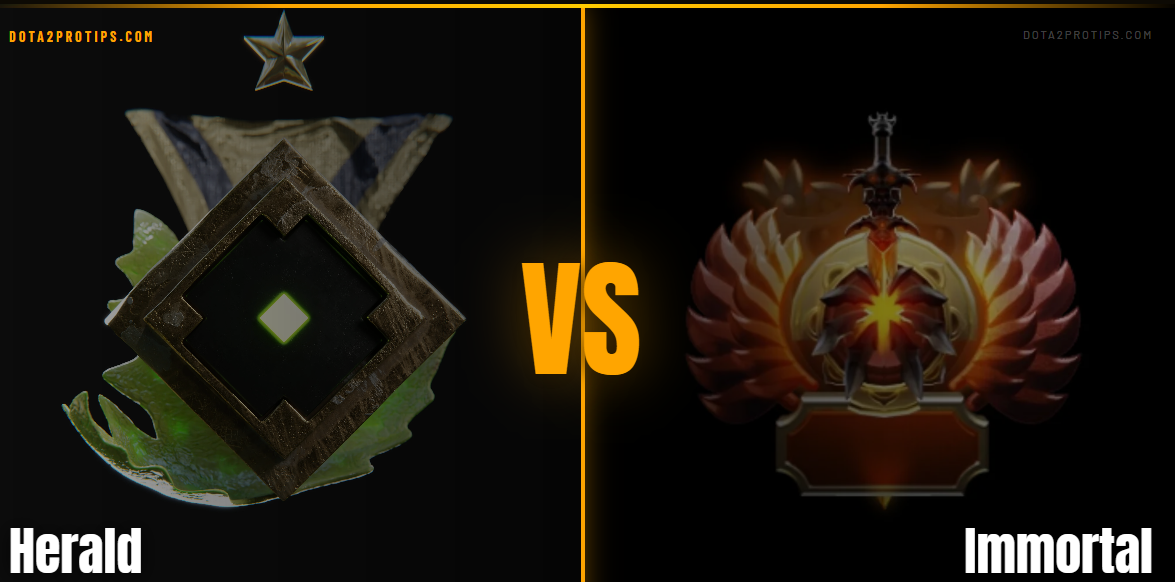
Dota 2 Ranks and Medals: From Herald to immortal

So you’ve decided to brave the wild world of Dota 2 ranked matchmaking. Maybe you’re proudly showing off a shiny Legend medal on your profile, or you’re grinding out those final few games to escape the depths of Herald hell. Let’s talk about what these ranks and medals actually mean in 2026—and what they DON'T mean.
What Ranks Really Mean (and What They Don’t)
First off, your medal is not a Ph.D. or a personality test. It’s just a symbol of your Matchmaking Rating (MMR)—basically the game’s best guess of your skill level in Dota 2. A higher rank means you’ve been winning more than losing against similarly matched opponents. Simple. Your rank does not measure your intelligence or moral worth, and it sure as hell doesn’t guarantee you’ll get any respect in your next pub. It’s just a reflection of your recent performance in ranked games.
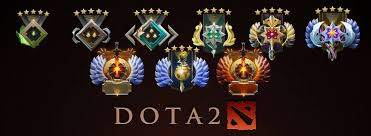 Each rank from Herald to Immortal is essentially a bucket that your MMR falls into. Valve uses these buckets so you get matched in games that (theoretically) are balanced. In reality, some matches will still feel like 5 vs 0 stomps while others are full-blown clown fiestas. That’s just Dota. Your medal tries to capture the median of all that chaos and say, “This is roughly where you belong.”
Now let’s break down the rank ladder from bottom to top in practical terms (with a bit of tough love and sarcasm):
Rank Distribution Reality: How Many Players Are in Each Rank?
Let’s put the ranks in perspective. Here’s an approximate breakdown of Dota 2’s rank distribution in early 2026 (percentiles show the portion of the player base you have outperformed to reach each bracket):
Dota 2 Ranks, MMR Brackets, and Player Percentiles
| Rank Medal (Divisions) | Approx. MMR Range | Player Percentile (global) |
|---|---|---|
 Herald (I–V) Herald (I–V) | 0 – 769 MMR | Bottom ~7% (starting out) |
 Guardian (I–V) Guardian (I–V) | 770 – 1539 MMR | Top ~93% (learning maps & basics) |
 Crusader (I–V) Crusader (I–V) | 1540 – 2309 MMR | Top ~78% (the average baseline begins) |
 Archon (I–V) Archon (I–V) | 2310 – 3079 MMR | Top ~55% (the absolute middle) |
 Legend (I–V) Legend (I–V) | 3080 – 3849 MMR | Top ~28% (above average) |
 Ancient (I–V) Ancient (I–V) | 3850 – 4619 MMR | Top ~15% (high-skill bracket) |
 Divine (I–V) Divine (I–V) | 4620 – 5619 MMR | Top ~8% (elite tier) |
 Immortal Immortal | 5620+ MMR | Top ~1.9% (leaderboard players) |
Note: Percentiles approximate the portion of the playerbase you’ve surpassed—e.g., reaching Ancient means you’re in roughly the top 15% of all players, while Herald sits at the bottom ~7%.
As you can see, the vast majority of players reside in the lower and middle brackets. Even reaching Legend puts you ahead of about three-quarters of the player base. Achieving Divine or Immortal makes you one of the rare elite. For instance, if you’re sitting in Immortal, you truly are in the top couple percent of all players worldwide. And even just escaping Herald/Guardian already means you’re leaving the lowest ranks behind.
Herald (~0–800 MMR)
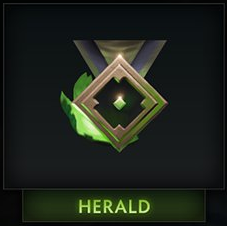 Herald is the starting trench of Dota 2. This is the land of absolute beginners and clueless bots (sometimes literally bots). If you’re here, you or your teammates might still be figuring out how to buy items, use the courier, and that you’re not supposed to jungle from level 1. Herald games are chaotic but oddly pure; everyone’s just mashing buttons and learning. What Herald represents: You're at the bottom ~7% of the player base and just starting out. What it doesn’t represent: any refined skill or game sense. If you’re in Herald, relax—there’s nowhere to go but up. Win some games, learn from your mistakes, and you’ll leave Herald behind faster than a feeding Pudge leaves the fountain.
Guardian (~800–1600 MMR)
 Guardian players have at least discovered that the minimap is a thing. They’ve improved a bit: they buy a couple of wards now and then, they know not to stand under an enemy tower alone at level 3 (usually), and they’ve got a basic idea that some heroes are supports and some are carries. Guardian matches can still be a mess—imagine five players independently farming different creep camps and occasionally colliding by accident. What Guardian represents: you’re out of the absolute basement, but still in the bottom ~15% of the player base, learning your way around the game. What it doesn’t represent: that you have everything figured out. You’ll still see Sniper players with four Wraith Bands, or supports who think buying a courier counts as “job done.” You’re making progress, but a long way from the big leagues.
Crusader (~1600–2300 MMR)
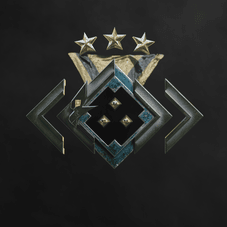 Crusader is where Dota newbies morph into Dota regulars. You’ve put in some hours and maybe watched a YouTube guide or two. People in Crusader generally understand last-hitting, know what BKB (Black King Bar) is, and more or less follow the idea of laning phases. Many Crusaders have a couple of comfort heroes (looking at you, Phantom Assassin spammers) and lean hard on those. What Crusader represents: you’ve got some fundamentals down and are possibly around the bottom ~22% of players (the average baseline begins around here). What it doesn’t represent: that you’re ready to dominate higher brackets. Crusaders still make plenty of boneheaded moves. The difference is they sometimes realize it five seconds after they die instead of not at all.
Archon (~2300–3080 MMR)
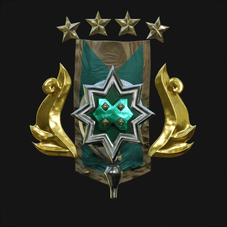 Archon is roughly the middle of the pack—the statistical average. An Archon player is squarely in the middle ~50% of the Dota population. By now, you often see teams with fairly normal composition (someone picks a mid, someone picks a support, etc.), and players will actually ping missing heroes. What Archon represents: you’re average, maybe slightly above. This is the median rank of Dota—the bell curve peak. What it doesn’t represent: that you’re great. Archon players often know a bit about everything (they might check hero win rates or have a sense of current meta heroes) but still lack consistency. It’s also where ego starts creeping in; Archons can easily think they’re better than they really are.
Legend (~3080–3850 MMR)
 In Legend, players are above average, and they know it. You might be in the top ~28% of players (meaning you outrank roughly 72% of the entire player base). Legend players have a decent grasp of game flow, and many have a strong hero pool or even a signature hero they dominate with. You’ll see more dynamic plays: smoke ganks, counter-initiations, maybe even actual Roshan contests.
What Legend represents: you’re a solidly above-average player. Likely you’re a student of the game—you watch pro matches and read patch notes, and you might even follow the meta. What it doesn’t represent: mastery. Legends still misjudge high-ground pushes, miscalculate buybacks, and tilt when a fight goes south. You’re better than most, but you’ve still got major room to grow.
Ancient (~3850–4620 MMR)
 Ancient is where players become seriously skilled. If you’re Ancient, you’re in roughly the top ~15% of players. Here, mechanical skill and game knowledge are high, and mistakes are less frequent (though they still happen – they always do, even in pro games). People in Ancient typically have at least one meta hero they can play to a strong standard (like spamming that Earth Spirit or Tusk in patch 7.41), and they know advanced techniques (stacking camps efficiently, using utilities like Smoke of Deceit proactively). What Ancient represents: you’re good. Not world-class, but definitely one of the better pub players out there, edging into the high-skill bracket. What it doesn’t represent: that you can coast. Many players plateau in Ancient because competition is fierce. You’ll face plenty of tryhards, and you might need to start thinking about the game in a more strategic way to keep climbing.
Divine (~4620–5620 MMR)
 Divine is basically the waiting room for Immortal. This is the top ~8% of players – the elite of the elite in public matchmaking. If you’ve made it to Divine, you’re either on the cusp of greatness or maybe an Immortal player who had a rough losing streak last night. These games are high quality and high pressure. Everyone communicates (sometimes too much if you count the all-chat smack talk). If you slack off or get out of position, expect to be punished hard and fast. What Divine represents: a very high level of skill and understanding. You likely specialize in a role, maybe even scrim or play in amateur leagues, and you’re aware of the ultra-current meta (like those insane Void Spirit and Shadow Fiend picks dominating patches). What it doesn’t represent: that you’re untouchable or “just unlucky not to be immortal." Divines often slide up and down around the Immortal threshold because every game is ultra-competitive. Consistency and mental fortitude are key at this stage.
Immortal (5620+ MMR)
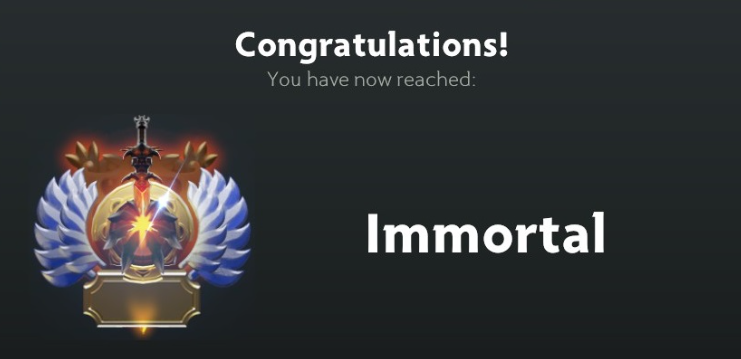
 Immortal: the promised land. You made it… or did you? Immortal is an entirely different beast. Once you cross that threshold (around 5620 MMR as of now), your medal stops showing stars and starts showing your exact numeric leaderboard ranking in your region (if you’re high enough). Hitting Immortal means you are among the top ~1.9% of the player base—an impressive feat. Take a moment to feel good about that. Now forget it, because you’re about to be humbled all over again. The skill range within Immortal itself is enormous. The difference between an Immortal at rank #5000 and an Immortal at rank #50 is like the gap between a local basketball hero and LeBron James.
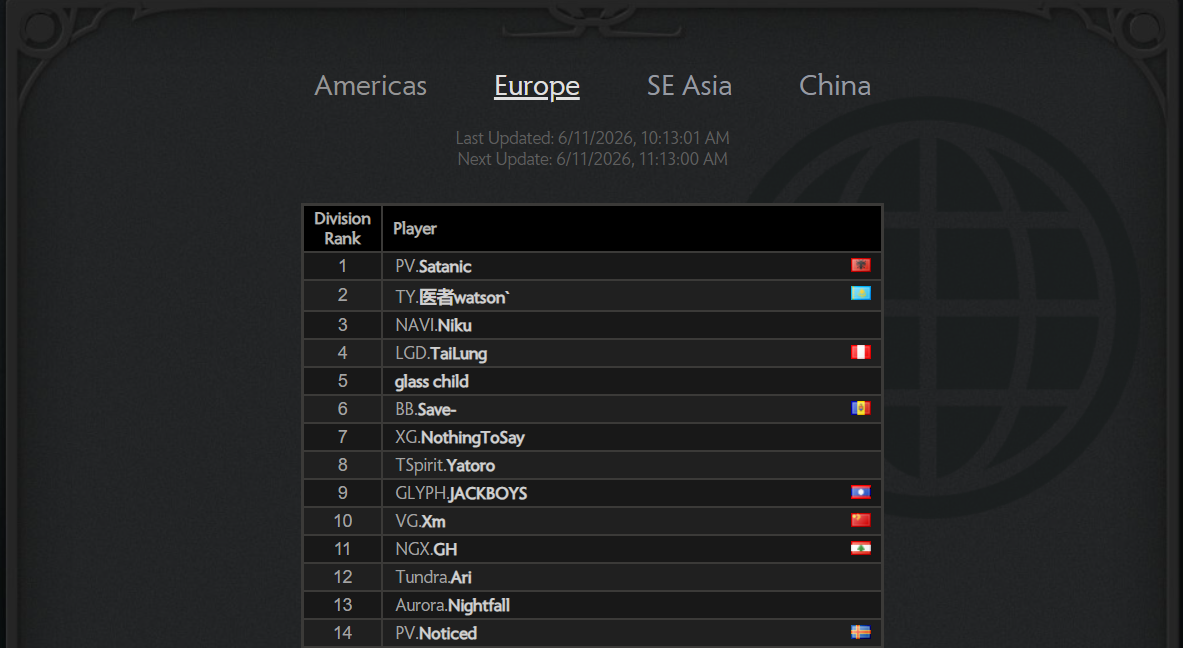 The top players on the EU leaderboards have soared to 17,000+ MMR (even pushing 18,000 MMR), making earlier milestones like 12k or 15k look quaint. If you barely scraped into Immortal by spamming one cheesy hero or abusing a broken patch, you’ll find the competition is brutal. What Immortal represents: You're extremely skilled—one of the best in your region, possibly flirting with semi-pro opportunities. What it doesn’t represent: that you’ve reached the pinnacle. Even at Immortal, there’s always a higher rank to climb: the Immortal leaderboard is a ruthless ladder of its own.
P.S: I'm also in this bracket, but on the lower end xD.
The Medal System vs. MMR (No More +25 Flat)
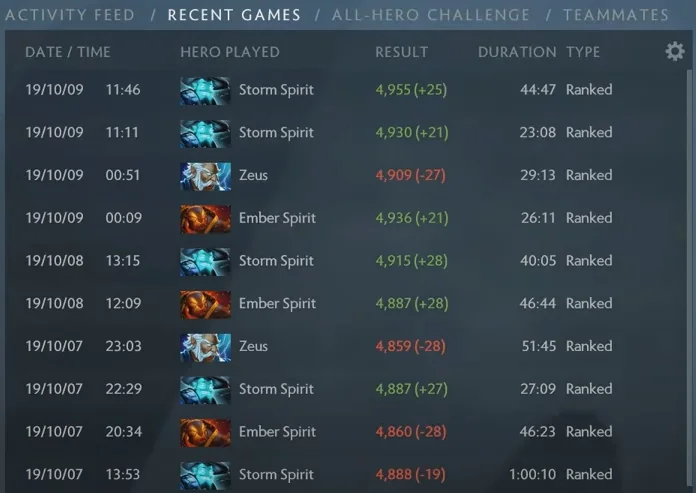
A common misconception: “Medal rank vs. MMR—what's the difference?” The answer: basically nothing. The medal (Herald, Guardian, etc.) is simply a shiny representation of your underlying MMR. When your MMR crosses a threshold, your medal ranks up; drop below, and it ranks down. In the old days (pre-2023), each ranked game usually gave or took a flat +25/-25 MMR for a win or loss. But with the new Glicko-based system introduced in patch 7.33 (“New Frontiers”), MMR gains and losses are no longer fixed. The system tracks your rank confidence—how sure it is of your skill—and adjusts how many points you gain or lose accordingly. If the system isn’t confident about your rating (for example, you’re newly calibrated or returning after a long break), you might get a larger jump for wins and a bigger drop for losses (e.g., +40 for a win or -40 for a loss). Once it’s confident in your skill, MMR changes settle into a smaller range (often around ±25 per game).
The key constant is that individual performance doesn’t directly affect your MMR change. The system doesn’t care if you went 20/0 on Invoker and your team still lost—you'll lose roughly the same MMR as your struggling teammate who went 0/10 on Spectre. And if you play like garbage but your team carries you to victory, you still gain MMR. In Dota’s ranked system, only winning and losing matter, not your style points.
Rank Confidence & Calibration
Rank Confidence is a behind-the-scenes metric that indicates how certain the matchmaking system is about your current MMR. When you first play ranked or after a long break, the system has low confidence – it doesn’t quite know how good you are yet. That’s why during calibration matches or when your medal shows as “uncalibrated,” you might see big swings in your MMR per game (it’s trying to find your level faster). Smash a bunch of calibration games in a row and you could jump +500 MMR in a flash; lose them all and you might spiral downward just as quickly. But once your rank confidence rises (say, above ~30%), the wild swings subside, and each game moves you only incrementally.
Bottom line: after the shift to Glicko, the ranked system adapts to your consistency. But it still fundamentally rewards one thing: winning more than you lose.
How to Climb the Dota 2 Ranks?
Finally, let’s tackle the million-dollar question: How do you climb out of whatever rank hell you’re stuck in? Short answer: win more games than you lose (duh). Long answer: focus on things you can control. Here are some real-talk tips:
Pick a role (and mostly stick to it). If you’re swapping between hard carry one game, offlane the next, then roaming support the game after, you’re hurting your own growth. Do what actual pro players do: specialize. You don’t see top players like Yatoro playing carry one match and hard support the next in serious games—they stick to their honed roles. Find your niche (maybe you’re a great mid laner or a killer support) and focus on it.
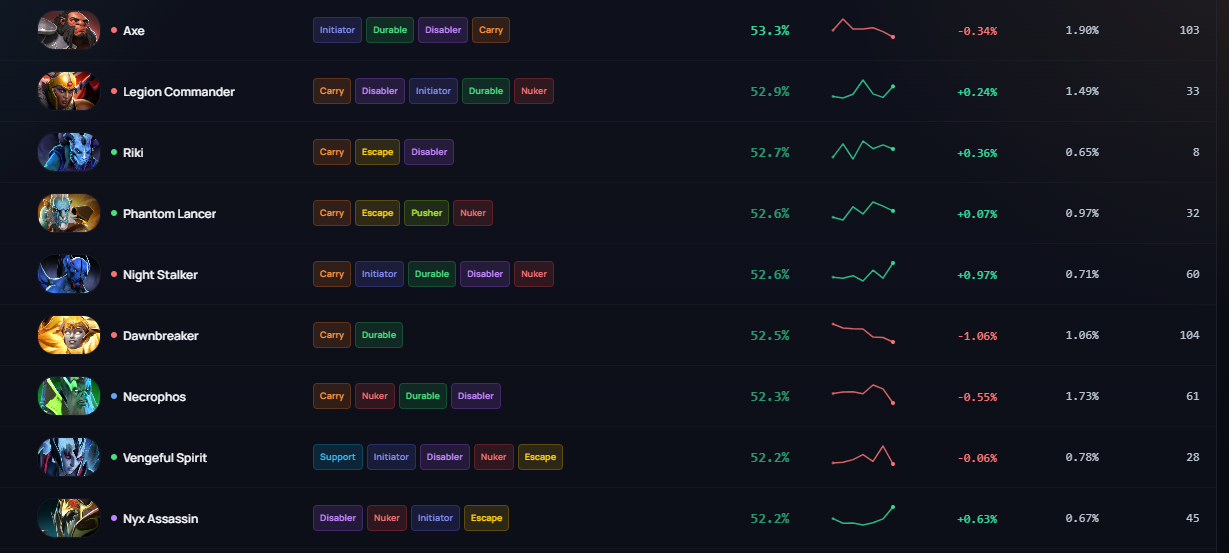
Master a small hero pool. Don’t try to “master” all 127 heroes at once. Spamming 3 or 4 heroes that you’re really good at will get you further than being mediocre with 30. If you get bored, remember: climbing MMR is often about consistency, not variety. Also, stick to strong meta heroes when you can (ask any high Immortal player – they’re not out there first-picking meme heroes every game unless they want to lose). If Necrophos is overpowered this patch with a 52% win rate, maybe lean into that to grind out some wins.
Check your ego. The amount of games thrown due to someone’s pride is insane. If you truly believe you’re better than your team, prove it by playing well—not by flaming and tilting. Remember, even the best have bad games; what sets them apart is they own their mistakes and learn. Tilt and blame get you nowhere (except maybe a chat ban).
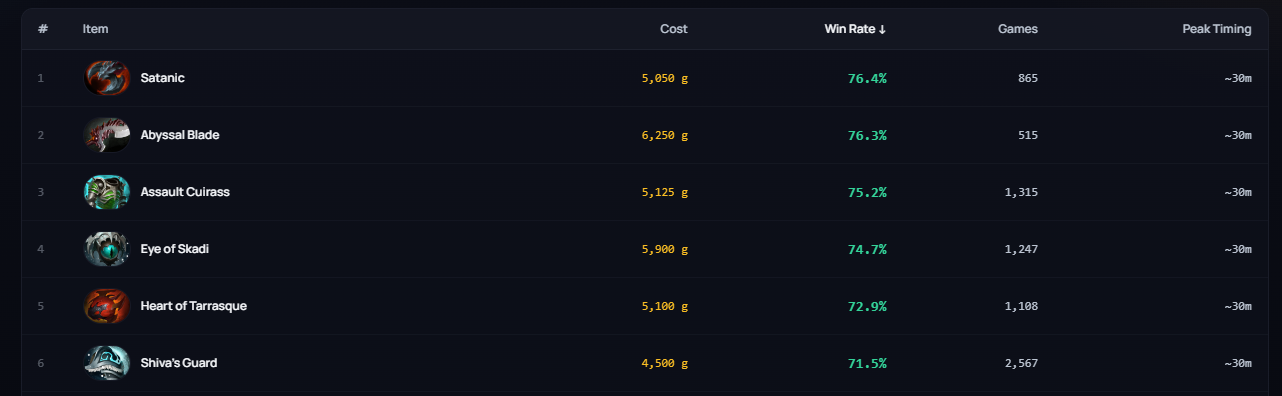
Nail the basics every game. Wards, courier usage, itemization, map awareness—these are not optional at higher ranks. Respect the fundamentals: if the enemy has four stuns and a Silencer, don’t be stubborn—buy that Black King Bar. If you’re a support, swallow your pride and buy detection against the enemy Riki. Dota is a game of details: skip the basics, and you’ll keep feeding or losing won games.
Learn from your games. Here’s a harsh truth: if you’ve played hundreds of games at the same rank, you’re doing something wrong to stay stuck. After a tough loss, instead of immediately queuing with steam coming out of your ears, review your replay or just reflect. What went wrong? Was it laning, item choices, playing into counters, not adapting, or poor communication? Sometimes, the climb requires looking critically at your own play rather than cursing the matchmaking gods. It’s what pro analysts (like myself) and coaches do with their teams; you can do it too for yourself.
Wrap-Up
Dota 2’s rank system is an unforgiving mirror. It shows you where you stand in the grand scheme of things – and sometimes, you won’t like what you see. But if you put in the work, keep a clear head, and maybe swallow a bit of pride, you can climb from the trenches of Herald to the peaks of Immortal.
And when you do, you’ll know you earned it—no free wins or shortcuts, just good old-fashioned grind and improvement. Good luck out there, and remember: even the climb is part of the game.
Read more
All articles →
12 August 2026
TaiLung Match Fixing Investigation

18 June 2026
How to predict Dota 2 matches
2 June 2026
Tundra Esports is leaving Dota 2
Tundra Esports, TI 2022 winners and the #1 team in the world, has officially left Dota 2. Their entire championship roster has been sold to 1win. When even the strongest team in the scene can’t make the numbers work, it’s a massive wake-up call for the future of Dota 2.