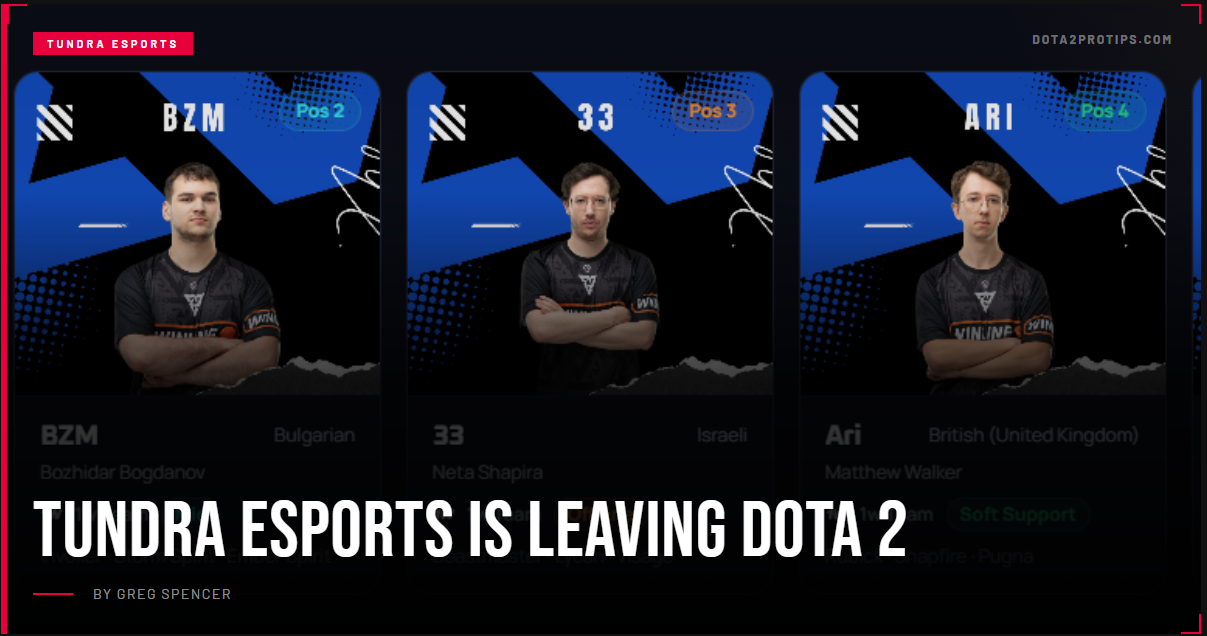
Tundra Esports is leaving Dota 2
Tundra Esports, TI 2022 winners and the #1 team in the world, has officially left Dota 2. Their entire championship roster has been sold to 1win. When even the strongest team in the scene can’t make the numbers work, it’s a massive wake-up call for the future of Dota 2.
Tundra Esports is officially stepping away from Dota 2. Yes, the same Tundra that won The International 2022, won countless Tier 1 trophies, and was widely seen as the strongest team of 2026. Their entire championship-winning roster and coaching staff have been sold off to the 1win team (a betting company org), marking the end of Tundra’s Dota 2 division. This isn’t just another org calling it quits—it's an absolute gut punch to the scene.
We have something important to tell you!
— TUNDRA (@TundraEsports) June 1, 2026
To keep up with the players, new adventures, and the latest news, follow @onewin_dota2! pic.twitter.com/d4DPrW6SMG
It’s not even been two months since we saw the exits of Heroic and paiN Gaming from Dota 2, and now Tundra—arguably the biggest fish of them all—is gone. And if you’re wondering why all these orgs are bailing, here’s a one-word answer you’re going to hear a lot: MONEY. Cold, hard cash (or the lack thereof). I’ve written about these sustainability issues before, and unfortunately, Dota 2 is proving us right again. The pattern is clear as day: when even champions and top seeds can’t make the business work, something’s fundamentally wrong.
Tundra’s departure is different from Heroic’s or paiN’s in one particular way.
Tundra wasn’t a struggling newcomer or a mid-tier team getting frustrated with results. They were top dogs. They won TI 2022, dominated the past year’s circuit with multiple major titles (we’re talking three BLAST Slam trophies in a row in a row, a DreamLeague championship, and an ESL One title), and until this roster transfer, Tundra sat at #1 on the ESL Pro Tour rankings(EPT). They had it all: top of the global standings, a guaranteed invite to the $2 million Esports World Cup (EWC) this summer, and a direct invite to The International 2026 in Shanghai as one of the favorites. Heck, they even have a dedicated sponsor (Winline) and a robust fanbase. And they still left. If THAT doesn’t tell you how tough the economics of Dota 2 are for an org, nothing will.
So, why leave now, of all times?
Right before those huge events, they were practically assured a spot in. Because even if Tundra shows up to those tournaments, there’s no guaranteed profit at the end of the road. Winning a slice of big prize pools sounds great on paper, but it’s basically playing roulette with millions of dollars in team expenses. Let’s break down the brutal math: Running a top Dota 2 team isn’t cheap. You’ve got player salaries (and top-tier players like 33, BZM, Pure & Co. don’t come cheap), coaching staff, analysts, management, bootcamps, and travel across the globe—and that’s a year-round burn. On the income side, you have uncertain prize winnings and some sponsorship deals. But sponsors aren’t exactly lining up to pour money into Dota teams these days, and Valve gutted the DPC system (no more high-guarantee leagues or Majors funded by the publisher’s Battle Pass money). So an org has to bankroll everything upfront with fingers crossed that MAYBE at the end of the year their team wins enough to cover the cost. Even if you do win some events, you only keep a cut of the prize pool (players rightfully get the majority).
Look at Tundra’s recent example
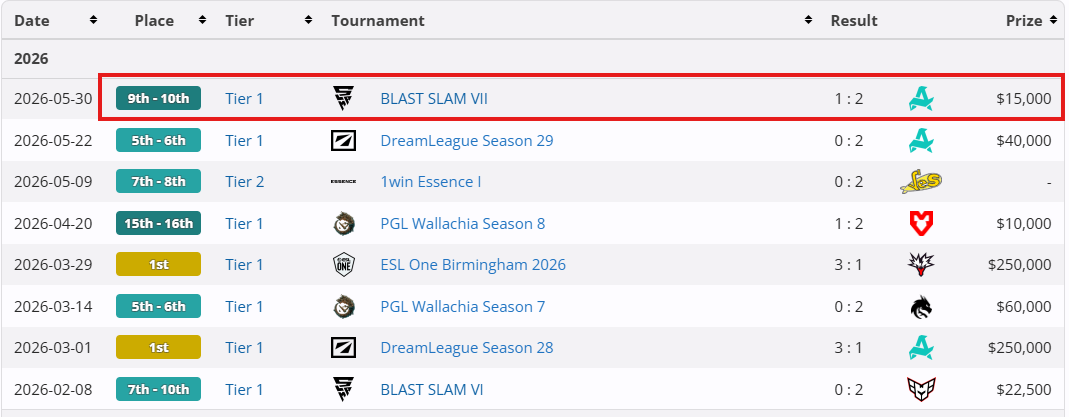 They placed 9th-10th at BLAST Slam 7 (a complete flop) and earned just $15,000—probably not even one player’s monthly salary. Sure, if they won EWC or TI, they’d rake in a huge prize, but those are one or two events out of an entire year, and there are no guarantees. As an org, you can’t budget on “maybe we’ll win TI." Profit margins in Dota are razor-thin or non-existent. Tundra’s management clearly did the math and decided it’s better to cash out now (likely with 1win’s buyout money offsetting their costs) than to double down on another expensive roll of the dice in the hopes of a big win that might not come.
And if a world-class team like Tundra can’t make the numbers work, what hope do smaller orgs have? This is the part that depresses me: Tundra leaving isn’t just one org’s story; it’s a canary in the coal mine for Dota 2’s ecosystem. We’ve seen a parade of respected organizations jump ship lately. Heroic’s CEO spelled it out: Dota 2 is a “tough game to commercialize.” Heroic, paiN, and Secret (who suspended operations earlier this year) all cited that even decent results and fan engagement weren’t translating into sustainable business. If Tundra—flush with trophies and top-tier status—still felt Dota was a losing venture, who’s left that can truly weather the storm?
What about the other teams?
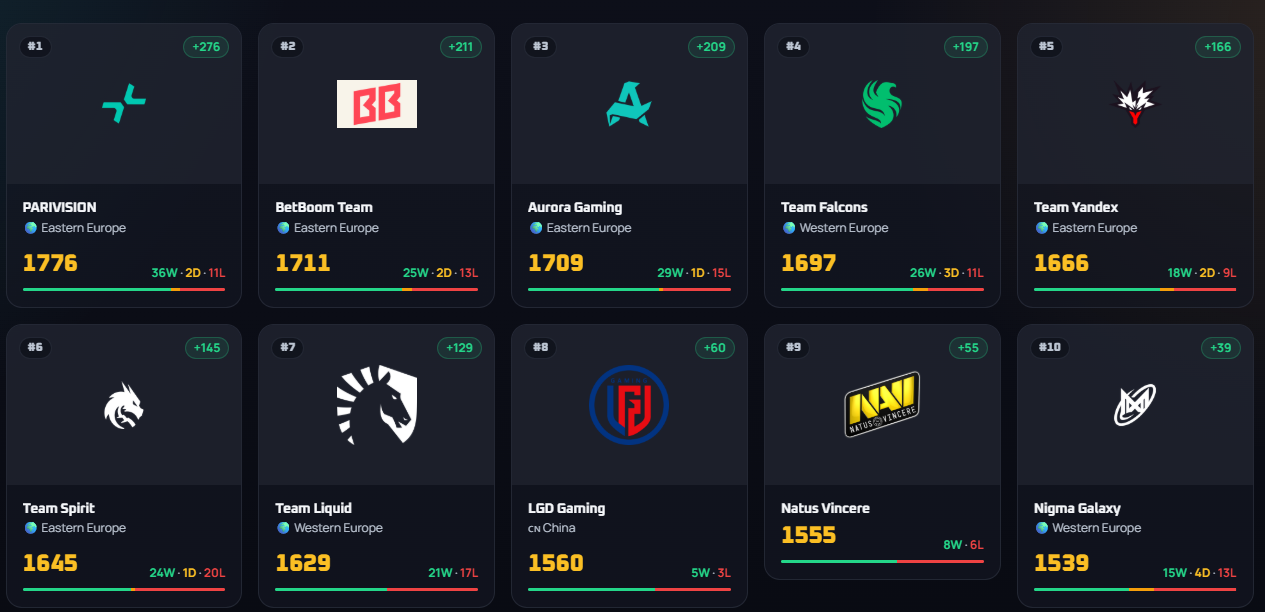 Right now, the Dota 2 scene is starting to look like a patchwork of survivors and new opportunists. We’ve got a lot of proven, legacy orgs like Team Liquid, OG, Virtus.pro, and Aurora that are hanging on (by sheer inertia or love of the game).
Then we have teams backed by what I call “oil money”—the likes of Team Falcons and Nigma Galaxy, with deep-pocketed owners from the Middle East who are willing to burn cash for prestige and passion.
And then, increasingly, we have the betting companies: BetBoom, PARIVISION, and now 1win (which just snapped up Tundra’s roster). I have nothing against the players on those squads—they're insanely talented and deserve to compete—but it’s impossible to ignore that the tier-one scene is turning into a battleground for betting brands to duke it out.
This is what happens when the game developers and tournament organizers don’t provide a sustainable environment for traditional sports orgs: only those with outside money or ulterior marketing motives stick around. So unless Valve, ESL, or PGL steps in with structural changes—be it a reworked official league, better profit-sharing, or something—we might be left with a Dota 2 pro scene consisting solely of gambling companies fighting each other. Is that really what we want? I sure don’t, and I’d bet most fans and players don’t either.
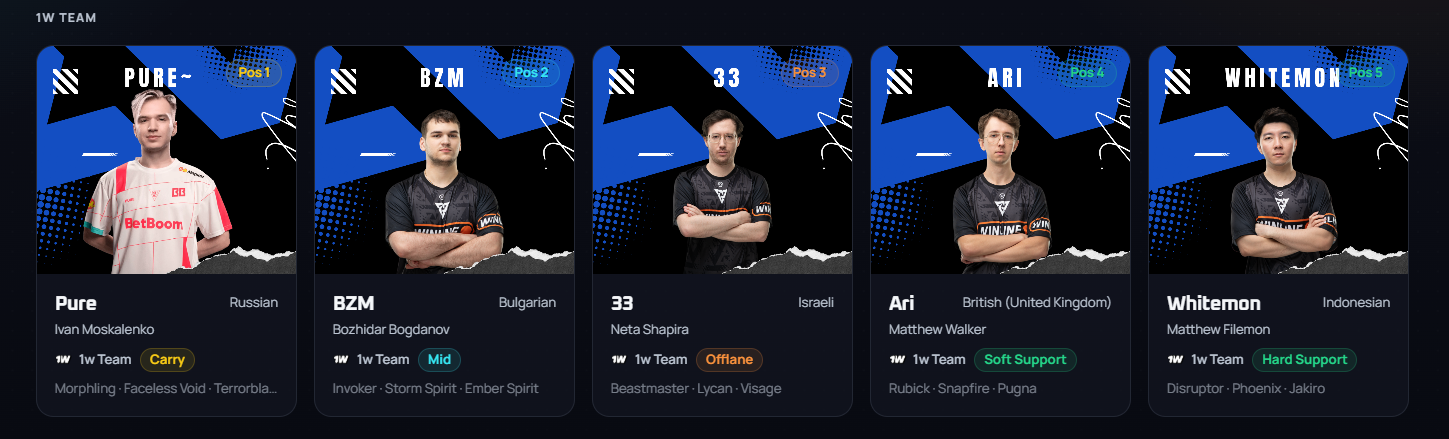 To be clear, the players will continue competing—just under the 1win banner—so the roster remains intact. Thankfully, Dota’s rules mean their hard-earned EPT points and direct invites transfer with the players, so we’ll still see them at EWC and—hopefully—at TI. But the Tundra brand that built this legacy? Poof, gone from the field. It’s frankly insane: Tundra was one of the teams to beat, and now we’ll never see them in their jerseys again at a Valve event or any other event, for that matter.
In the end
I want to express how truly sad this is. I wasn’t sure I’d see the day when a reigning champion like Tundra would choose to bow out rather than ride the wave of success into The International. It shows just how dire the economics have become when even the top dog can’t justify sticking around for the biggest prizes of the year. As a Dota fanatic, it hurts to lose a team of this caliber. Thank you, Tundra Esports, for everything—for the unforgettable Aegis run, the breathtaking matches, the fun content, and the years of representing our game at the highest level. You guys helped define a Dota era, and you’ll be missed.