10 Heroes That Defined The International 2026
Before we start, this is NOT a list sorted by pick rate. If it were, Mirana and Hoodwink would be fighting for first place, Earth Spirit would sit below several heroes he completely outperformed, and Lifestealer would barely enter the conversation.
That would be statistically correct—and it would completely miss what happened in Shanghai.
Some heroes controlled every draft without appearing on the map. Some were picked constantly and kept losing. Others needed one player, one series, or even one final team fight to become part of TI history. So this ranking combines contest rate, win rate, flexibility, playoff importance, signature performances, and how much each hero influenced the actual story of The International 2026.
Quick Hero Rankings
| Rank | Hero | Picks | Bans | Contest Rate | Pick Win Rate | Main reason |
|---|---|---|---|---|---|---|
| 1 | Earth Spirit | 44 | 93 | 92.57% | 65.91% | The complete TI hero |
| 2 | Treant Protector | 8 | 140 | 100.00% | 87.50% | Controlled every draft |
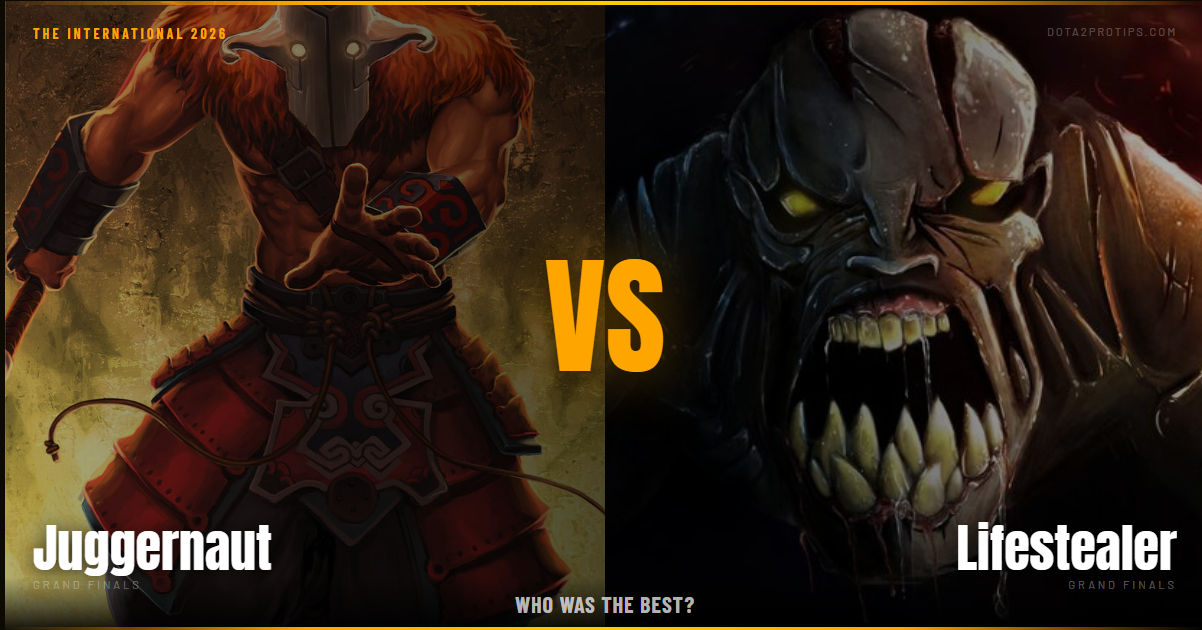
| 3 | Lifestealer | 20 | 26 | 31.08% | 50.00% | Decided the Grand Final |
| 4 | Io | 17 | 36 | 35.81% | 52.94% | The ultimate draft flex |
| 5 | Ember Spirit | 40 | 67 | 72.30% | 55.00% | The hero of Nigma's miracle |
| 6 | Shadow Fiend | 32 | 78 | 74.32% | 56.25% | Carry farming at maximum speed |
| 7 | Lone Druid | 17 | 66 | 56.08% | 41.18% | More terrifying than successful |
| 8 | Winter Wyvern | 51 | 52 | 69.59% | 56.86% | The late-game support of TI |
| 9 | Keeper of the Light | 23 | 99 | 82.43% | 56.52% | Draft respect on another level |
| 10 | Hoodwink | 73 | 42 | 77.70% | 41.10% | Everywhere—but not always effective |
Tournament totals in this table follow the supplied dataset and Liquipedia’s completed main-tournament statistics.
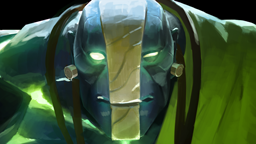
Earth Spirit
Earth Spirit keeps the enemy in chaos and his friends in the fight. Adapting to any battle scenario, he can send his statue remnants back and forth to damage foes, or grips an ally from the jaws of death.


44 picks · 93 bans · 92.57% contested · 65.91% win rate
Earth Spirit was THE hero of The International 2026. He was contested in 137 of 148 games, won almost two-thirds of his appearances, scaled into the late game, created tempo in the mid-game, survived lanes, started fights, escaped fights, and could be moved between roles depending on the team. Treant had more bans. Hoodwink had more picks. Pangolier had a slightly higher win rate across a much smaller sample.
But nobody combined everything like Earth Spirit.
And then there was Noone-.
TEAM VISION arrived in the playoffs as the strongest team at the event, and Noone’s Earth Spirit became one of the clearest reasons why. Team Yandex allowed him to have it in the upper-bracket final despite his perfect record on the hero entering the series. VISION won. In Game 2 of the Grand Final, they gave it to him again, and his control helped Satanic’s Lifestealer take the 64-minute map that tied the series.
But Earth Spirit was not attached to one player or one role. Nisha and Malr1ne used him from mid. Iron Wing moved him around their drafts. Teams could select him early without revealing their entire structure, and that is basically the dream hero in professional Dota: strong enough to first-phase, flexible enough to hide the lanes, active enough to create pressure, and greedy enough to remain relevant after 50 minutes. Because it is simply BROKEN.
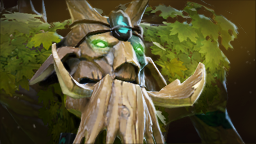
Treant Protector
Treant Protector is ever the benevolent ally, sprouting regenerating armor for his cohorts and their fortifications alike. Emerging unseen from among the trees, he binds foes with overgrowth as he leeches health from enemies and into nearby allies.
8 picks · 140 bans · 100.00% contested · 87.50% win rate This is one of the most ridiculous tournament statistics I have ever seen.
Treant Protector was contested in every single game of The International 2026. One hundred and forty bans. Eight picks. Seven wins.
You could basically describe the entire tournament like this: captains entered the booth, banned Treant Protector, and then started drafting Dota.
He crushed lanes, protected buildings, offered global sustain, controlled huge areas in team fights, and punished teams for trying to play slowly. In a tournament already full of long games and difficult high-ground pushes, nobody wanted to face a hero capable of making that problem even worse.
The funniest part is that Treant barely appeared. Earth Spirit rolled through fights. Lifestealer decided the Aegis. Ember created Nigma’s fairy tale. Treant spent almost the entire tournament sitting behind a red ban icon. Actually, that is complete draft control.
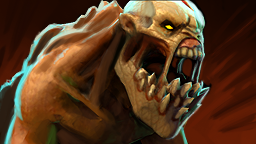
Lifestealer
Should Lifestealer get close to his prey, there is little that can save them. Travelling within a creep or an allied hero, once he nears a foe he explodes from his host body, surprising enemies and tearing into them with his claws.
20 picks · 26 bans · 31.08% contested · 50.00% win rate
Twenty picks. Fifty percent win rate. On paper, Lifestealer looks like a completely average TI carry.
Then the Grand Final happened.
TEAM VISION picked Lifestealer for Satanic in Game 2 and won. They picked it again in Game 4 and won again. When the Aegis came down to one final map, Spirit handed Lifestealer to Yatoro—and he won the tournament with it.
Three of the five Grand Final maps featured Lifestealer on the winning side.
That is tournament impact. That is why a hero with only a 31.08% contest rate enters the top three.
The hero matched the final perfectly: long games, extended fights, carries becoming six-slotted, and both teams desperately trying to keep their position one alive through one more spell cycle. Satanic used Lifestealer to punish Spirit twice. Yatoro used it to survive the most important fight of the year.
In Game 5, VISION found him, controlled him, and came SO close to killing him at the decisive moment. Rue saved him. Yatoro turned. Satanic died twice. The throne fell.
Lifestealer was not the best carry across ten days. He was the carry that owned the final day

Io
Io has a talent for making allies more effective. A powerful companion, the wisp's tether speeds allies and stops enemies. Capable of linking to and teleporting across the battlefield with an ally, Io can make a dangerous ally even deadlier.
17 picks · 36 bans · 35.81% contested · 52.94% win rate
Io had fewer picks than every hero above it. I do not care. No hero outside the top three created more draft confusion.
Team Yandex made Io one of the most dangerous flexes of the playoffs. They could show the hero early, wait for the opponent to reveal its lanes, and then move it between Chira_Junior and watson. Against Liquid, Chira_Junior played Io from mid, BUT watson took the carry role.
That flexibility mattered more than Io’s raw 35.81% contest rate. The hero changed what the opponent was allowed to assume. Was this a support? A mid? A carry concept? Was Yandex accelerating one core or secretly drafting a completely different lane structure? By the time the answer appeared, the counters were already locked.
Pure also gave Iron Wing another Io specialist, and TEAM VISION even used Noone- on the hero in Game 1 of the Grand Final. Not every experiment worked—Ame’s Io carry became another flop symbol of Xtreme’s disastrous tournament—but that was part of the story too.
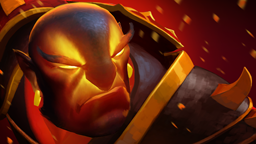
Ember Spirit
Swift and elusive, Ember Spirit strikes all nearby enemies in rapid succession, and ties them up with burning chains. Quickly rushing across the battlefield to arrive at one of his exploding remnants, few can avoid, or capture, his flame.
40 picks · 67 bans · 72.30% contested · 55.00% win rate
If this ranking were based on emotional impact alone, Ember Spirit might be even higher.
This was Lorenof’s hero. Nigma entered TI looking like another unstable outsider, lost their opening series, and then somehow transformed into one of the best late-game teams in Shanghai. Ember was at the center of that transformation.
Against Spirit, Lorenof had the performance that changed Nigma’s entire tournament. In the opening map of their 2-0 victory, his Ember finished 12/7/25 with 52,000 hero damage and 819 GPM in a 59-minute war. In the other map, he went directly into Yatoro’s Lone Druid and somehow became the more scary core.
It was not only him. Gpk had his own raid-boss moments on Ember, including the ultra kill against TEAM VISION. The hero did not just win games. He gave desperate teams a way back into them. I would call it the comeback factor.
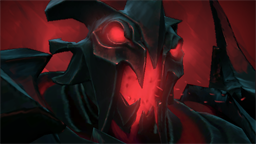
Shadow Fiend
Capturing souls from every kill he makes, Shadow Fiend is always gathering his power. Every assault, each carefully aimed raze that kills an enemy, brings him closer to unleashing his gathered souls in a deadly blast of scouring energy.
32 picks · 78 bans · 74.32% contested · 56.25% win rate
Shadow Fiend represented the carry philosophy of TI 2026 better than almost any other hero: win the lane, consume the map, reach critical mass, and force the opponent to deal with an absurd amount of damage.
Teams banned him seventy-eight times because the hero could turn small laning advantages into a farming gap that never stopped growing. More importantly, both finalists trusted him on the biggest stage.
Yatoro opened the Grand Final with a 16/1/7 Shadow Fiend and a rampage. Spirit won in 46 minutes, and for one map it looked like TEAM VISION had no answer at all. Then Satanic took Shadow Fiend in Game 3, started well, and still got outscaled by Yatoro’s Terrorblade. Same hero. Same stage. Completely different ending.
That is why Shadow Fiend sits at six rather than higher. He was strong, respected, and absolutely capable of deciding maps. But he still needed the draft to provide stability around him. When the fight became chaotic or the opposing carry reached the later timings first, even a farmed SF looks too fragile.
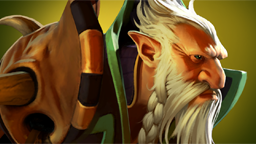
Lone Druid
Battling alongside his powerful spirit bear, Lone Druid demolishes enemy forces and structures. Switching as needed between ranged and melee attacks with his transformation, should he have enough time to arm and strengthen both himself and his companion, there is little that can stop them.
17 picks · 66 bans · 56.08% contested · 41.18% win rate
That win rate looks terrible. And yet, if you watched TI, you know exactly why Lone Druid belongs here.
The hero was banned sixty-six times because teams were not scared of the average Lone Druid. They were scared of Yatoro’s and Satanic's Lone Druid. They were scared of giving one of the greatest farming carries ever a second unit, another health bar, structural damage, and a game that could suddenly feel impossible after one lost fight.
Against Iron Wing, Yatoro produced one of the cleanest individual games of the playoffs. Spirit took Game 1; the mental damage was obvious, and the series never recovered. Against Aurora Gaming, Spirit stayed alive through losing situations until the bear became too large to handle. That was the real Lone Druid experience at TI: you thought you were winning until the hero decided you were not.
But the 41.18% win rate matters. The bear was not universally broken. If the rest of the lineup lost tempo, Lone Druid could still become a very expensive hero watching the enemy control the map.
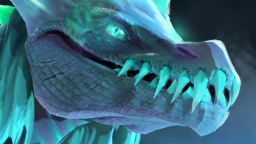
Winter Wyvern
Winter Wyvern stalks the skies, slowing foes with burning cold as she soars over the battlefield. Should the enemy be foolish enough to gather, she curses them to attack one of their own as she blasts the gathering with icy splinters.
51 picks · 52 bans · 69.59% contested · 56.86% win rate
Winter Wyvern was probably the most reliable traditional support at TI 2026. Fifty-one picks. Positive win rate. Almost identical priority on both sides of the draft.
The hero fit the tournament perfectly because every late-game fight revolved around protecting one ridiculously farmed core. Satanic, Yatoro, watson, Lorenof—every top team had someone who needed one extra second to turn a fight. Wyvern gave them that second. Sometimes that was enough to save the carry. Sometimes it was enough to destroy the opponent’s entire initiation.
We saw it clearly in LGD against Yandex. LGD tried to play Windranger into Winter Wyvern, and once Cold Embrace entered the equation, the matchup became a nightmare. You can build your entire draft around physical burst, but what happens when one support spell tells your damage to stop existing?
GH also used Winter Wyvern in Nigma’s huge group-stage victory over Spirit, contributing to the structure that let Lorenof and the rest of Nigma survive an absurd 59-minute game. Wyvern was never the superstar of those fights. That was exactly the point. She kept the superstar alive.
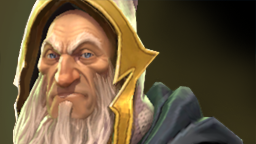
Keeper of the Light
Keeper of the Light is a helpful addition to any team. Manipulating the mana of both his allies and enemies, he effortlessly destroys lesser foes with waves of illumination, then enters his spirit form to gather his team to press the assault.
23 picks · 99 bans · 82.43% contested · 56.52% win rate
Keeper of the Light is the first hero on this list whose ban count tells a much bigger story than his pick count. Ninety-nine bans. Only twenty-three appearances. Teams clearly believed that leaving KOTL available could break the entire pace of a draft.
And honestly, I understand it. This was a tournament where farming efficiency, wave control, and the ability to keep cores active mattered enormously. Keeper gave elite teams another engine. He could accelerate the greedy heroes, protect the map, and turn already difficult lineups into something that never seemed to run out of resources. He was not as completely forbidden as Treant, but he lived in the same category.
Then TEAM VISION brought him out in Game 4 of the Grand Final. With 9Class on Keeper, Noone- on Sand King, Noticed on Doom, and Satanic farming on Lifestealer, the whole lineup operated like a machine. Spirit could not isolate the targets they needed, VISION controlled the fights, and we got Game 5.
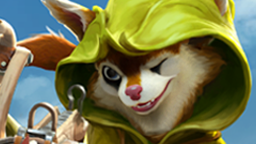
Hoodwink
Always at hand when trouble's afoot, Hoodwink lives to tangle with the threats that fill the haunted forest she adopted as her home. Toting a massive crossbow while still able to scurry through the woodland with the greatest of ease, Hoodwink is nearly impossible to keep tabs on in battle. Lose track and she'll pop out behind you -- your stunned carcass already dangling in one of her nets.
73 picks · 42 bans · 77.70% contested · 41.10% win rate
Hoodwink was tied for the most-picked hero at The International, appeared in more than three-quarters of all drafts, and still finished with a 41.10% win rate. How does that even happen?
The answer is simple: teams loved what Hoodwink offered in the draft more than what she consistently delivered in the game. She gave lineups lane pressure, long-range catch, vision, and a support that could contribute without stealing half the map. That made her extremely easy to pick early. But easy to draft does not automatically mean easy to win with. Too many teams selected Hoodwink as generic support glue and then discovered that the rest of their lineup lacked reliable damage or a real way to finish fights.
Still, the hero had moments. Malady’s Hoodwink helped Yandex punish Liquid during one of the wildest playoff series of the tournament, including that tormentor steal, where Dukalis used the hero to create early openings in the decisive Game 5 of the Grand Final. But that final map also summarized Hoodwink perfectly: active, annoying, constantly finding something—and ultimately not enough to win the game.
The Heroes That Just Missed
Mirana tied Hoodwink with 73 picks, but her 46.58% win rate and lower ban priority made her feel more like tournament glue than a defining force. GH’s playoff Mirana against Falcons and not me’s Mirana in the final map was memorable, but the hero rarely controlled drafts by herself.
Lina had an 80.41% contest rate, yet finished below 50% when picked. Her role flexibility created fear, but the actual tournament told a messier story: BZM carried with her, Larl played her mid, and Gpk had games where the usual Lina impact disappeared under pressure.
Centaur Warrunner was the most-picked offlaner (except Malr1ne who played it on mid) with 59 appearances, but his 49.15% win rate is almost the perfect description of his event: reliable, useful, and completely average. He helped teams play their five-man Dota, but he rarely became the reason they won it.
The Bottom Line
If these rankings reveal one thing about TI 2026, it is that the best tournament heroes solved more than one problem.
Earth Spirit could lane, fight, scale, initiate, survive, and hide the draft. Io could change roles after the opponent thought the lanes were settled. Winter Wyvern could erase an entire physical-damage strategy with one save.
But the final also reminded us that statistics have limits.
Lifestealer was NOT the most contested carry. He did not have the highest win rate. He was not the biggest hero of the group stage.
He was simply there when the Aegis was decided.
Some heroes define a patch.
Some heroes define a draft.
Some heroes define a player.
And some heroes survive for sixty-four minutes, turn one final fight, and become part of Dota history.